Foundation models trained on large unlabeled corpora develop emergent capabilities, tasks that go beyond the training objective. We extend this paradigm to multimodal biology with Bonbon, a foundation model for molecular interactions trained on approximately 3.2 trillion tokens of paired protein-ligand sequences. From a single representation space, Bonbon exhibits three zero-shot emergent capabilities at hierarchical levels of resolution: functional (mechanism of action), residue (binding site localization, including orthosteric/allosteric discrimination), and bond (covalent versus non-covalent engagement). All three capabilities generalize to out-of-distribution complexes. Bonbon was trained on protein-ligand sequences alone, without any task-specific supervision and without structural coordinates. We conducted controlled scaling experiments across six model scales from 42M to 1.6B parameters; every capability evaluated shows a sharp jump at the largest scale on continuous metrics, even as pretraining loss decreases smoothly. This demonstrates that loss-based scaling laws alone are insufficient to predict when zero-shot emergent capabilities become available. The capabilities reported here emerge after training at a 1:2,000 parameter-to-token ratio to accommodate the sparsity of paired biological interaction data. The same frozen representations achieve state-of-the-art binding and affinity prediction at five orders of magnitude greater speed than co-folding methods. In prospective wet-lab validation across nine disease targets spanning seven protein families, Bonbon achieves a 61.5% dose-response hit rate on de novo compounds, yielding structurally novel molecules not previously reported to inhibit these proteins, including for out-of-distribution targets.
1 Introduction
Foundation models trained by self-supervised learning at scale exhibit emergent capabilities: tasks that go beyond the training objective [1]. This principle extends from language [2], [3] to multimodal vision-language [4], [5] and unimodal biological domains: ESM-2 predicts protein structure from masked language modeling [6], and Evo captures regulatory patterns across genomes [7]. Yet no model for molecular interactions has demonstrated capabilities beyond its explicit training objective without task-specific supervision. Co-folding models [8], [9], [10] have transformed protein-ligand structure prediction, yet their capabilities do not extend beyond predicting 3D atomic coordinates. Independent benchmarks report substantial memorization with limited generalization to unseen ligands [11], [12]; capabilities such as affinity prediction require supervised heads rather than emerging from the pretrained representation. The broader landscape of molecular interaction modeling remains fragmented, with task-specific models each trained with explicit supervision for a single capability [13], [14], [15].
We hypothesize that a foundation model for molecular interactions, with an architecture matched to the learning objective and trained at sufficient scale, can extract high-order interaction properties encoded in the sequences of interacting molecules, without requiring structural coordinates or physics-based analysis. Molecular interaction modeling faces challenges in both data and architecture that distinguish it from vision-language foundation models. For example, paired protein-ligand data is sparse, carrying far less signal than a dense image-caption pair [16], [17], with the patterns distinguishing functional outcomes (agonism vs. antagonism, covalent vs. non-covalent engagement) distributed across millions of examples rather than concentrated within each. Similarly, molecular interactions form many-to-many relationships, where one protein binds thousands of ligands and one ligand hundreds of proteins, whereas standard multimodal architectures assume a one-to-one correspondence between modalities.
We introduce Bonbon, a transformer-based model trained by self-supervised learning on approximately 3.2 trillion tokens of paired protein-ligand sequences. Bonbon adopts a data-heavy scaling regime: a 1:2,000 parameter-to-token ratio, two orders of magnitude beyond the Chinchilla-optimal ratio for natural language [18].
From a single representation space, Bonbon exhibits three emergent capabilities arising at hierarchical levels of resolution. At the functional level, Bonbon zero-shot predicts mechanism of action across six classes, including agonist/antagonist discrimination on the same receptor. At the residue level, Bonbon localizes where interactions occur, enabling zero-shot binding site detection, including on targets such as GPCRs and transporters that lack well-defined pockets, and a parameter-free signature distinguishes orthosteric from allosteric pockets, including on the same protein. At the bond level, dense representations classify covalent versus non-covalent engagement and per-residue representations localize the reactive residue. All three capabilities emerge from paired sequences alone, without task-specific labels, structural coordinates, or binding geometries, and generalize to out-of-distribution complexes. In a controlled scaling experiment across six model scales (42M to 1.6B parameters), all three capabilities show a sharp jump at 1.6B that is not predicted by the smoothly decreasing loss curve.
The same frozen representations transfer to standard predictive benchmarks: Bonbon achieves state-of-the-art zero-shot binding prediction (MF-PCBA AUPR 0.081, LIT-PCBA-AF3 EF1% 16.6) and affinity prediction matching physics-based free energy perturbation (CASP16 r = 0.74, FEP+4 r = 0.78), at approximately five orders of magnitude greater speed than co-folding methods. In prospective wet-lab validation across nine disease targets spanning seven protein families, Bonbon achieves a 61.5% dose-response hit rate on de novo compounds, yielding structurally novel molecules not previously reported to inhibit these proteins, including for out-of-distribution targets.
A foundation model for molecular interactions, extending the foundation-model paradigm to multimodal biology.
Three emergent capabilities arising at hierarchical levels of resolution within a single representation space, without task-specific supervision.
A controlled scaling experiment showing that capabilities remain flat or near baseline through approximately three orders of magnitude of compute and emerge sharply at the largest scale on continuous metrics, while pretraining loss decreases smoothly.
State-of-the-art binding and affinity prediction at five orders of magnitude greater speed than co-folding methods, and prospective wet-lab validation across nine disease targets spanning seven protein families, with a 61.5% dose-response hit rate on de novo compounds, including for out-of-distribution targets, yielding molecules not previously reported to inhibit these proteins.
A data-heavy scaling regime (1:2,000) adopted to accommodate the information sparsity of paired biological data.
1.1 Related Work
Structure-based interaction modeling. Co-folding methods [8], [9], [10] predict 3D coordinates of protein-ligand complexes from structure or sequence inputs and have transformed binding pose prediction. However, capabilities beyond pose prediction require supervised heads: across recent structure-prediction models, affinity prediction is a fine-tuned regressor rather than a property recovered from the pretrained representation alone. Generalization is also limited: FoldBench reports substantial memorization on benchmarks with weak performance on unseen ligands [11]. In addition, these models systematically misplace allosteric ligands into orthosteric pockets [19].
Frozen-embedding interaction models. Paired protein-ligand encoders trained with contrastive objectives [20], [21] support binding-prediction retrieval at scale, but their representations have not been shown to learn capabilities beyond the binding signal they were trained on.
Task-specific interaction prediction. Pocket detection [13], [14] and allosteric site prediction [22] have historically been addressed by separately supervised models, each requiring residue-level annotations and 3D protein structures. Structure-based covalent docking tools [15] require the user to specify a priori that a covalent bond forms and predict only the resulting geometry, rather than identifying covalent engagement or the reactive residue.
Emergent capabilities in foundation models. [1] characterize emergent abilities as tasks not in the pretraining objective that appear with sufficient scale. [23] argue that apparent emergence is often a metric artifact: capabilities scale smoothly, and discontinuities reflect threshold-imposing evaluation metrics.
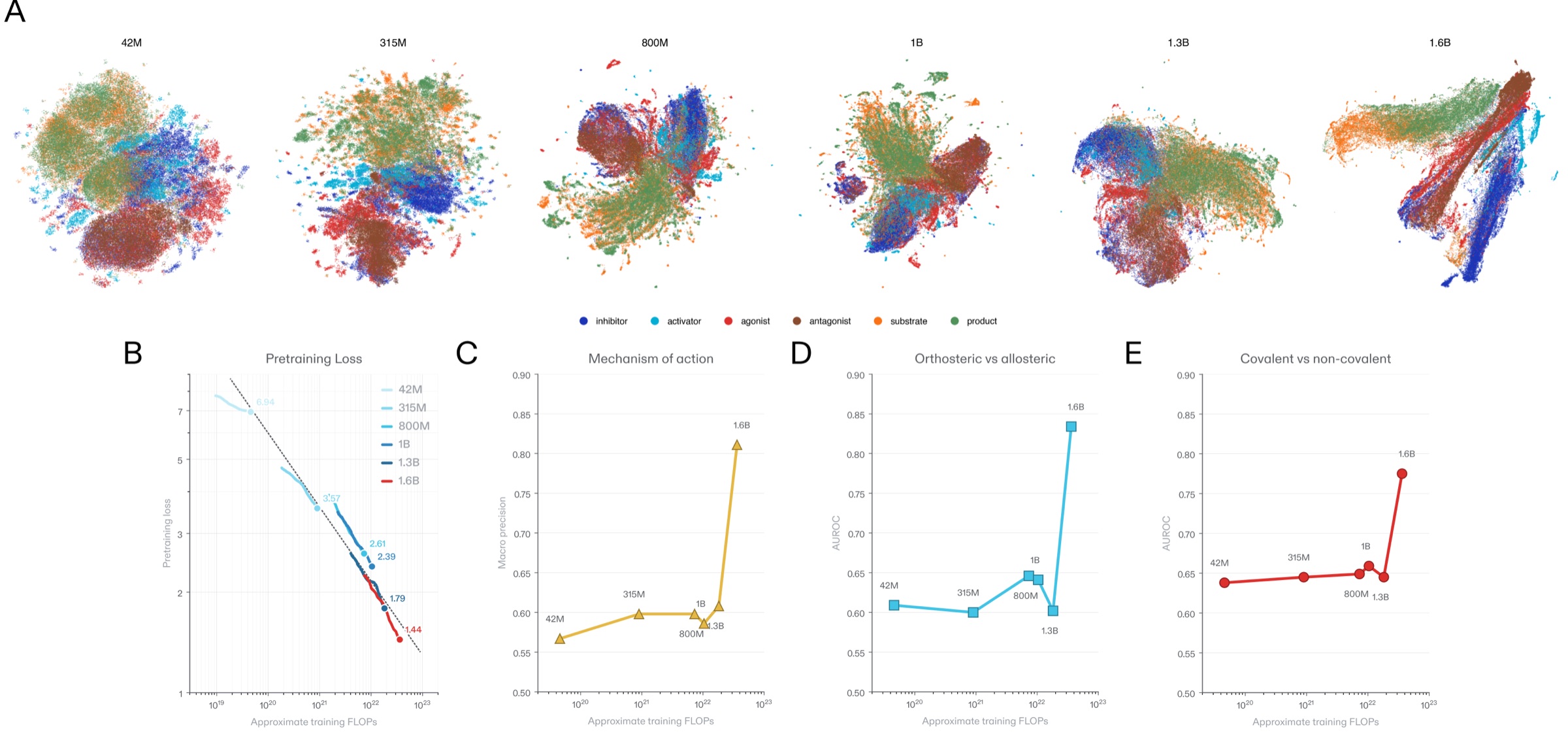
Figure 1. Capability emergence at scale.
Controlled scaling experiment across six model scales (42M, 315M, 800M, 1B, 1.3B, 1.6B parameters) under identical conditions except parameter count. Panels (b) to (e) use log FLOPs as the x-axis. (a) UMAP projections (visualization only) of frozen interaction representations at each scale, colored by mechanism-of-action class. (b) Pretraining loss vs. training FLOPs. (c) Six-class mechanism-of-action macro precision from a parameter-free signature, mean over ten evaluation splits. (d) Zero-shot orthosteric vs. allosteric AUROC on 6,032 OOD complexes. Morgan fingerprint baseline shown dashed. (e) Zero-shot covalent vs. non-covalent AUROC on the OOD complexes in which neither class carries a detectable electrophilic warhead. All capability evaluations use parameter-free signatures derived from frozen representations and applied unchanged across scales.
2 Model
2.1 Architecture
Bonbon is a transformer-based model trained by self-supervised learning on paired protein-ligand sequences. The architecture is designed for the many-to-many relationships inherent in molecular interaction data, with pre-layer normalization, rotary position embeddings, flash attention, and a 65,536-token context window sufficient to encode the longest known protein sequences and accommodate multi-component inputs (Appendix Figure A5).
2.2 Training Data
Training data comprised of paired protein-ligand sequences from proprietary screening datasets, enriched with synthetic interaction data generated to match the distributional properties of experimentally measured binding data from that corpus. The generation methodology is outside the scope of this paper and is the subject of a separate technical report. Every evaluation in this paper uses real experimental data from public databases and the published literature; no synthetic data appears in any evaluation set. The corpus spans soluble enzymes, membrane receptors, ion channels, and transcription factors, with ligand chemistries ranging from small molecules to peptides and protein-protein interactions.
Bonbon was trained on approximately 3.2 trillion tokens drawn from this corpus. The sampling distribution was designed to ensure diverse representation across both protein and ligand space, attenuating bias toward well-studied therapeutic targets.
Multiple quality filters were applied. PAINS-pattern compounds [24] and other reactive or aggregator-prone substructures are excluded to avoid pan-assay artifacts. Proteins with disproportionately broad ligand sets were removed to prevent their patterns from dominating representations. Sequence-level redundancy filters were applied to both the protein and ligand sides of the corpus. All proteins sharing greater than 90% sequence identity with any evaluation target were excluded prior to training as the basis for all OOD evaluation reported in subsequent Sections 3 and 4.
2.3 Model Training and Scaling Experiment
The 1.6B production model uses 3.2T training tokens, a 1:2,000 parameter-to-token ratio. Hardware, optimizer, and training schedule are described in Appendix A.1.
We chose this data-heavy ratio to accommodate the information sparsity of paired interaction data. To characterize how capabilities relate to scale, we trained six model scales spanning approximately three orders of magnitude in compute (42M, 315M, 800M, 1B, 1.3B, 1.6B parameters). We then evaluated each scale on (i) pretraining loss, (ii) zero-shot mechanism-of-action macro precision, (iii) zero-shot orthosteric/allosteric AUROC on OOD complexes, and (iv) zero-shot covalent vs. non-covalent AUROC on OOD complexes, with and without a detectable electrophilic warhead. Both AUROC evaluations use the parameter-free signatures of Sections 3.2 and 3.3, with signature features and signs derived once and applied unchanged across all six scales, isolating capability emergence from any signature-tuning effect. All models were trained on the same corpus, sub-sampled to roughly preserve the data-heavy regime, with the same sampling procedure drawing from the full corpus at every scale, so the data mixture, including the proportion of real and synthetic data, is preserved. The architecture family, optimizer configuration and warmup schedule match the 1.6B model, and only the parameter count and its corresponding token budget differ. Each run trained on a predetermined sample from the corpus, with no early stopping or convergence-based termination, and every capability was evaluated with the same protocol on the same held-out sets at every scale. Each scale is a single training run. Training-seed variability was not measured.
Pretraining loss decreases monotonically and continuously with compute, falling from 6.94 at 42M to 1.44 at 1.6B (Figure 1b). Each of the zero-shot capabilities shows a sharp jump at 1.6B, with the largest absolute increase concentrated at the final scale across all three. All capabilities are absent at the five sub-1.6B scales despite identical training conditions, confirming they are a property of the largest scale rather than of the corpus or training procedure alone. The capabilities show qualitatively different behavior: MoA macro precision stays between 0.567 and 0.608 across the five sub-1.6B scales (0.567, 0.598, 0.598, 0.586, 0.608), then jumps to 0.811 at 1.6B (Figure 1c). Orthosteric/allosteric AUROC stays at or near the Morgan fingerprint baseline (0.589) across the five smaller scales (0.609, 0.600, 0.646, 0.641, 0.602), then jumps to 0.834 (Figure 1d). Covalent AUROC measured on all molecules moves within a narrow band across the smaller scales (0.645, 0.678, 0.691, 0.675, 0.695) before reaching 0.838 at 1.6B (Appendix E.6). Ablating warhead presence, we evaluated only complexes in which neither class carries a detectable electrophile. AUROC on this subset is flat at 0.638, 0.645, 0.649, 0.659 and 0.645, then jumps to 0.775 at 1.6B (Figure 1e). All three sub-threshold series are non-monotone. Against log FLOPs their slopes are 0.012 (mechanism of action), 0.008 (orthosteric/allosteric) and 0.005 (covalent) per tenfold increase in compute, against 0.682, 0.780 and 0.437 respectively for the 1.3B to 1.6B step. Each capability is measured on a non-overlapping protein set, ensuring independence across evaluations, and on a continuous metric, addressing the criticism that apparent emergence can be an artifact of discontinuous evaluation metrics [23].
Loss-based scaling, the standard quantity used to predict compute-optimal training [18], is monotone across the six scales and gives no signal that capabilities are about to appear. Selecting a model size on the basis of loss alone would not reveal whether the next compute step crosses a capability threshold; the threshold is visible only when capabilities are measured directly. The 1.6B scale is the smallest configuration in this experiment at which the threshold is crossed. We report where the transition occurs, not why it occurs. A plausible hypothesis consistent with these observations is that recognizing an interaction property requires composing several pieces of information, none of which is a local property of either sequence, following the intuition of [1] about depth sufficient for sequential composition (Appendix A.4).
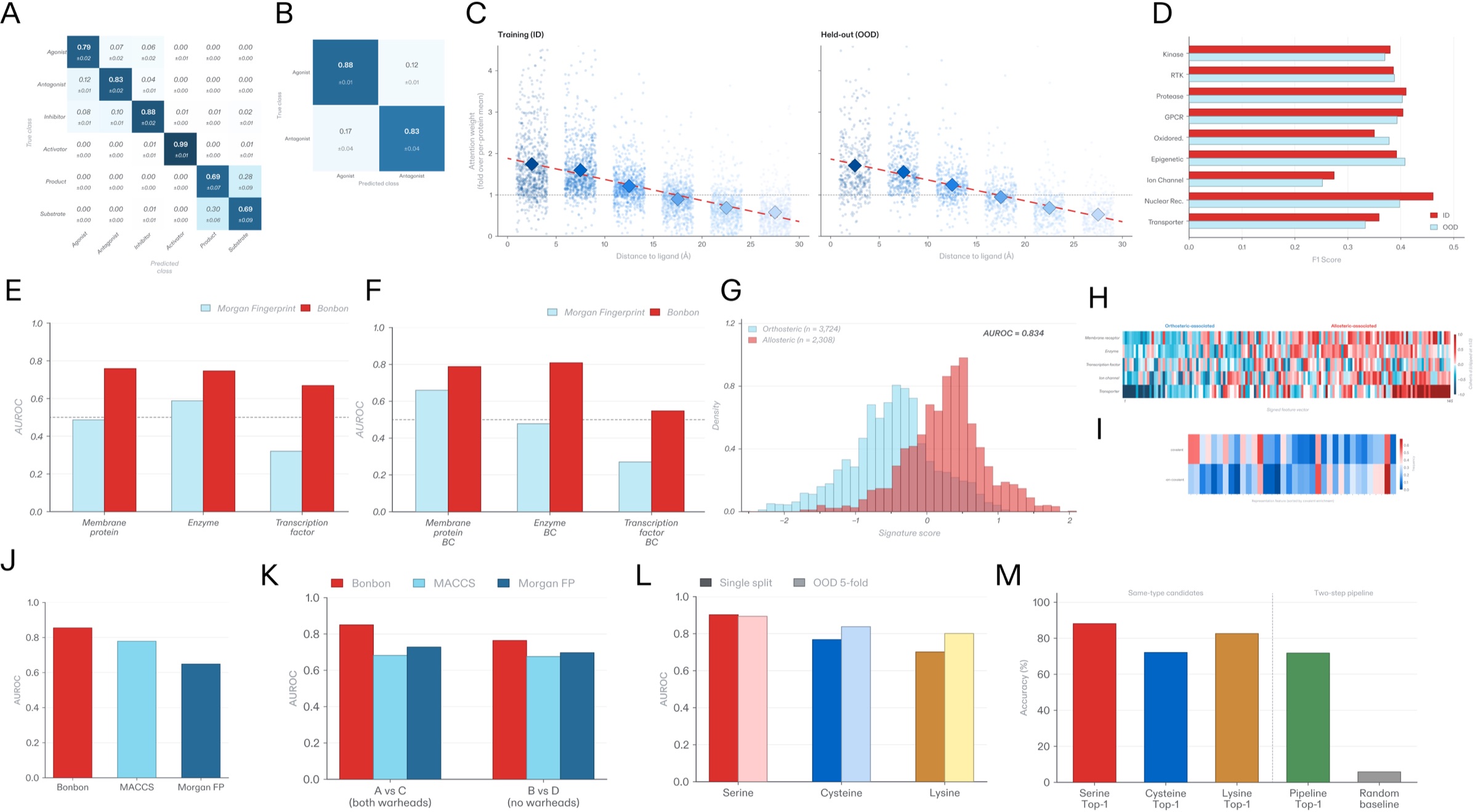
Figure 2. Emergent capabilities across three hierarchical levels, all from frozen representations.
Mechanism of action: (a) Six-class signature confusion matrix, column-normalized, mean over ten evaluation splits of a 107,027-pair OOD interaction set. (b) Within-receptor agonist/antagonist discrimination across 222 GPCRs. Binding site localization and orthosteric/allosteric discrimination: (c) Per-residue attention vs. ligand distance, ID and OOD. (d) Per-family binding site F1, ID and OOD. (e) Orthosteric/allosteric AUROC on 6,032 OOD complexes, per family. (f) Within-protein classification on 1,860 OOD complexes. (g) Signature score distributions by binding-mode class. (h) Signed feature vector: orthosteric-associated (blue) and allosteric-associated (red) features, by protein family. Covalent binding mode: (i) Activation frequency of the 36 signature features in covalent versus non-covalent complexes, sorted by covalent enrichment. (j) AUROC under full, warhead-matched, and warhead-free conditions. (k) Warhead-controlled comparison. (l) Same-residue-type classification for serine, cysteine, and lysine. (m) Top-1 reactive residue localization accuracy.
3 Emergent Capabilities
Bonbon’s frozen representations encode biological information about molecular interactions at three hierarchical levels of granularity: functional outcome, binding site identity, and bond type. None of these properties is determined by either the protein or the molecule alone, making each a property of the interaction that unimodal models cannot capture. Bonbon’s training data contained no task-specific labels for any of these properties. All three emerge only at the largest model scale (Section 2.3).
3.1 Mechanism of action prediction
Mechanism of action describes the functional outcome when a molecule binds a target (e.g., pathway activation vs. suppression). UMAP projection of Bonbon’s interaction representations across six mechanism classes (inhibitor, agonist, antagonist, activator, substrate, product) visualizes the hierarchical organization, separating regulatory from metabolic mechanisms (Figure 1a). A 160-feature parameter-free signature (107,027 interactions, molecules below 0.60 Tanimoto similarity to training data; Appendix B.1) yields 81.1% macro precision.
To eliminate the confound that the model exploits protein-family shortcuts, we evaluated within-receptor agonist/antagonist discrimination on 28,126 interactions across 222 GPCRs where every receptor has both classes (Appendix B.3). Holding the receptor constant acts as an ablation for protein identity as a possible shortcut for agonist/antagonist discrimination. Bonbon achieves 85.5% balanced accuracy (Figure 2b). No prior computational method has demonstrated zero-shot mechanism-of-action prediction across protein families.
3.2 Binding site localization and orthosteric/allosteric discrimination
Having demonstrated functional-level information, we tested whether Bonbon also encodes where on the protein binding occurs, despite no residue-level annotations and no structural information in the training data. Bonbon’s attention weights correlate linearly with ligand proximity (Figure 2c). Across 1,176 co-crystal structures spanning nine protein families (Appendix C), approximately 25% of attention heads self-organize for spatial localization, achieving F1 = 0.381 ± 0.142 (in-distribution, ID) and 0.388 ± 0.124 (OOD), consistent across families including nuclear receptors (F1 = 0.398 OOD) and GPCRs (0.393 OOD), where co-folding methods are known to place ligands unreliably [25] (Appendix Table A5). Four families perform comparably or better on OOD than on training proteins, ruling out overfitting. On COACH420 [14], Bonbon achieves F1 = 0.497, outperforming all three baselines (Appendix Table A6), while using sequence alone, without the residue-level supervision, 3D coordinates, or pocket annotations the baselines require. The 1,176-structure set described above is a harder test than COACH420, spanning targets such as GPCRs and transporters, whose binding sites are less well defined than the enzyme pockets that dominate COACH420.
We next tested whether Bonbon distinguishes orthosteric from allosteric binding. Orthosteric ligands occupy the primary endogenous binding site; allosteric modulators bind secondary pockets that offer higher target specificity. From Bonbon’s frozen interaction representations, we identified a 145-feature parameter-free signature whose discriminative direction between orthosteric and allosteric complexes is consistent across protein families (Appendix D.2).
Across 6,032 OOD complexes (141 OOD proteins), the signature achieves AUROC 0.834 versus 0.589 for Morgan fingerprints (Figure 2e). On the harder task of classifying binding mode among ligands of the same target (where proteins with both orthosteric and allosteric ligands act as an ablation of using protein identity as a shortcut), Bonbon achieves AUROC 0.821 across 1,860 OOD complexes (Figure 2f); on OOD membrane receptors, 0.788. Transcription factors are near chance (0.548), consistent with their smaller training representation. To test whether the site-detection heads causally support this discrimination, we ablated them at inference time and re-ran the same OOD evaluation. Ablating the 25% site-detection heads drops orthosteric/allosteric AUROC from 0.834 to 0.751; ablating 25% of heads at random gives 0.816 ± 0.002 across 10 seeds, so removing the site-detection heads costs roughly 4.5 times what removing an arbitrary subset of the same size costs. The capability degrades but does not disappear: at 0.751 the ablated model remains well above the Morgan fingerprint baseline of 0.589 (Appendix D.5). No prior computational method has demonstrated orthosteric/allosteric discrimination per ligand.
3.3 Covalent binding mode recognition
Binding site localization identifies where a molecule binds; a finer question is how: whether engagement involves covalent bond formation. Covalent drugs can reach targets considered undruggable. Using a 36-feature parameter-free signature from frozen representations, Bonbon achieves AUROC 0.838 on 1,212 OOD pairs spanning 237 proteins (Figure 2j). Two ablations remove warhead presence as an explanation. Among molecules that all carry electrophilic warheads, Bonbon separates those that form covalent bonds from those that do not (AUROC 0.834); among molecules that carry none, it still identifies the covalent binders, whose bonds form through the protein’s catalytic machinery rather than ligand reactivity (AUROC 0.775; Appendix E.2). Per-residue representations distinguish the reactive residue from non-reactive same-type residues (serine AUROC 0.902, cysteine 0.817, lysine 0.701), persisting after distance matching (Figure 2l; Appendix E.5). A two-step pipeline that predicts amino-acid type from pair-level features then ranks pocket residues of the predicted type achieves 71.8% Top-1 localization accuracy without prior knowledge of the reactive residue (Figure 2m), a 12-fold improvement over the 5.8% chance baseline. No prior computational method has demonstrated covalent engagement prediction from sequence alone.
4 Capabilities Translate to Predictive Accuracy and Novel Inhibitors
The three emergent capabilities (Section 3) demonstrate that Bonbon’s representations encode interaction-level biological information without task-specific training. Two further evaluations test whether this information translates to quantitative predictive accuracy on standard benchmarks (Section 4.1) and to biochemical activity validated in prospective wet-lab experiments (Section 4.2).
4.1 Binding and affinity prediction at five orders of magnitude greater speed
For binary binding prediction we use frozen embeddings directly. For binding affinity prediction we train a two-layer MLP probe [26] for ∼ 12 minutes on frozen embeddings using BindingDB [27]. Decontamination protocol and dataset preparation are described in Appendix G.
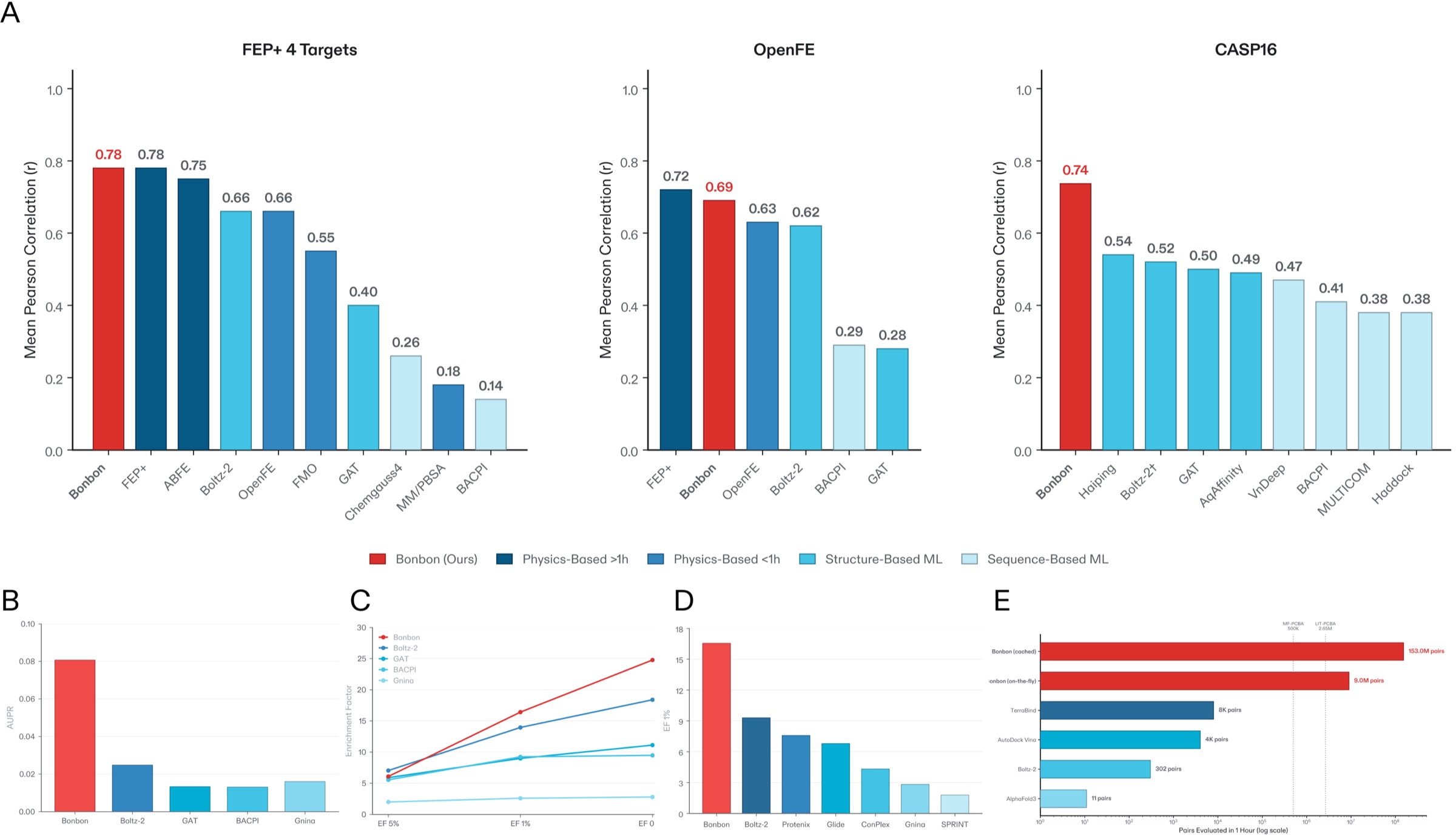
On MF-PCBA, Bonbon achieves state-of-the-art AUPR 0.081 and EF 0.5% of 24.8 (Figure 3b,c; full per-method comparisons in Appendix Tables A13–A15). On LIT-PCBA, Bonbon achieves state-of-the-art EF1% 11.4, more than double the previous best (Appendix Table A13). On LIT-PCBA-AF3 [28], a five-target subset of LIT-PCBA restricted to libraries of fewer than 100,000 compounds and therefore tractable for co-folding methods, Bonbon achieves state-of-the-art EF1% 16.6, against 9.3 for the strongest co-folding baseline (Figure 3d; Appendix Table A14). On affinity prediction, Bonbon’s MLP probe achieves Pearson r = 0.74 on CASP16, r = 0.78 on FEP+4, and r = 0.69 on OpenFE, matching physics-based free energy perturbation and surpassing co-folding methods (Figure 3a).
Accuracy is accompanied by orders-of-magnitude reduction in compute. Bonbon processes ∼ 2, 500 pairs/s on-the-fly or ∼ 42, 500 pairs/s with cached representations on a single H100, approximately five orders of magnitude faster than Boltz-2’s 0.05 pairs/s (Figure 3e). At proteome scale, screening DrugBank against the human proteome (1.66B pairs) completes in 11 hours versus an estimated ∼ 1, 100 GPU-years for Boltz-2 (Appendix Table A16).
Figure 3. Predictive accuracy and throughput. (a) Binding affinity prediction (Pearson r) on CASP16, FEP+4, and OpenFE. (b) MF-PCBA AUPR. (c) MF-PCBA enrichment factor across thresholds. (d) LIT-PCBA-AF3 enrichment factor at 1%. (e) Inference throughput: pairs evaluated per hour on a single H100, compared to co-folding and docking methods.
4.2 Prospective wet-lab experimental validation across nine disease targets
We used Bonbon to rank molecules generated de novo under synthetic-accessibility constraints against nine disease targets, and up to 24 compounds per target from the top-ranked set were synthesized and assayed, with dose-response IC₅₀ determination for actives (Figure 4; Appendix H). All tested compounds have Tanimoto similarity less than 0.60 to any compound in Bonbon’s training data. Structural novelty is assessed as described (Appendix H.3). The nine targets isolate three progressively harder tests.
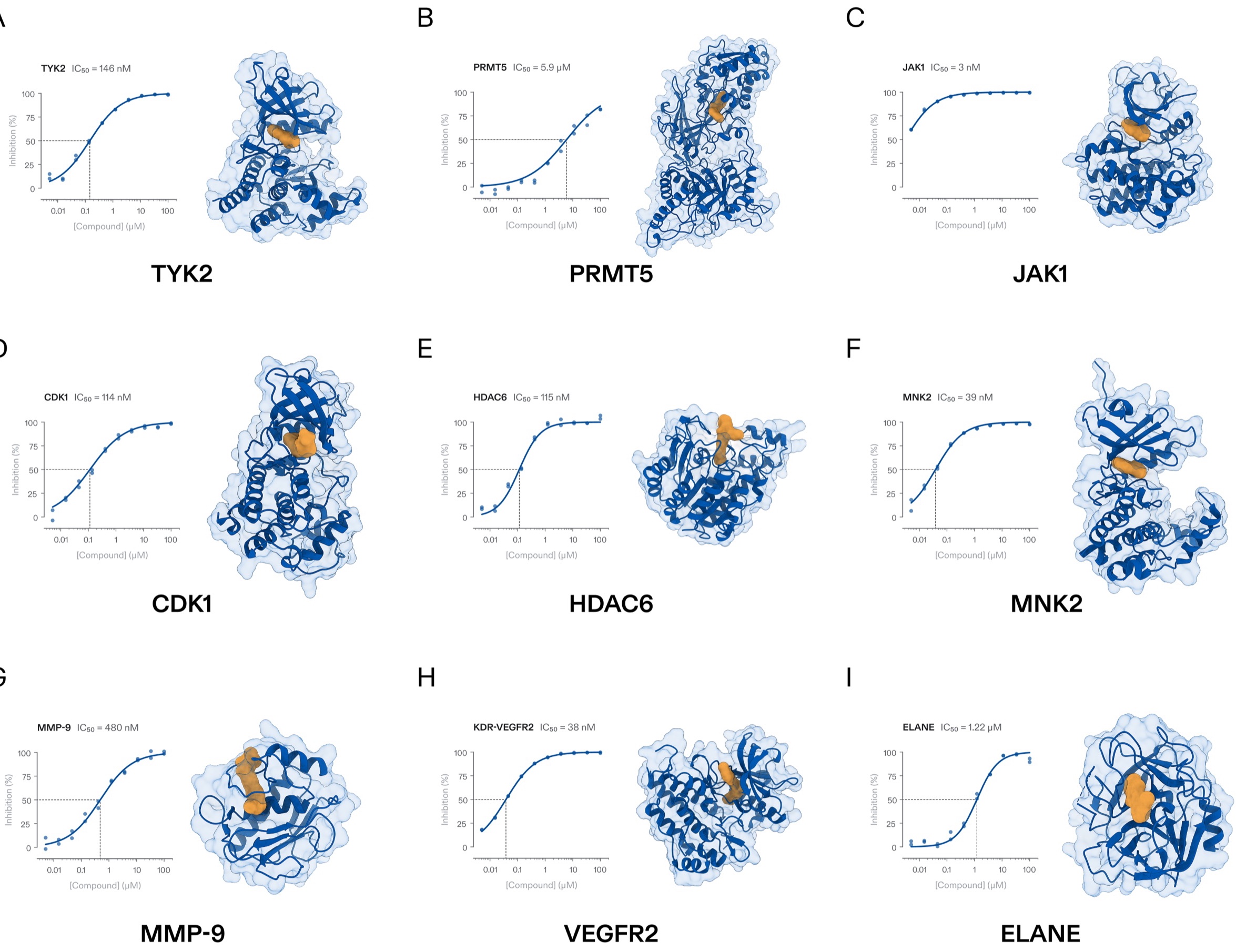
Figure 4. Prospective wet-lab validation across nine disease targets spanning seven protein families.
For each target, a ten-point dose-response curve with fitted IC₅₀ for one confirmed inhibitor (left) and that compound bound in the target (right; protein ribbon within a transparent surface, compound in orange; Appendix Table A17).
Bonbon yielded confirmed inhibitors for all nine targets, with IC₅₀ values reaching single-digit nanomolar and, on several targets, chemical matter outside the established inhibitor classes.
Novel and efficient inhibitors on well-characterized targets. TYK2, PRMT5, JAK1 and CDK1 have rich SAR and known pharmacophore classes; they test whether Bonbon identifies efficient and novel inhibitors within established chemical space. On TYK2, 23 compounds were confirmed as inhibitors in dose-response assays, with IC₅₀ values from 146 nM to 40 μM and four below 1 μM. None is a single-substituent analog of a known inhibitor and 17 are novel molecules. On PRMT5, 16 compounds were confirmed inhibitors, with IC₅₀ values from 186 nM to 143 μM. All 16 sit at 0.479–0.597 Tanimoto to the nearest known active and none is a single-substituent analog of any known inhibitor: Bonbon reached the productive region of PRMT5 chemistry without reproducing any individual compound in it, in a single ranked set and without iterative SAR. On JAK1, 21 compounds were confirmed inhibitors, with IC₅₀ values from 3 nM to 28 μM, 13 below 1 μM and three below 100 nM. Four are novel molecules, and single-digit nanomolar potency was reached without optimization. On CDK1, all 22 compounds tested were confirmed inhibitors, with IC₅₀ values from 114 nM to 23 μM and eight below 1 μM; 10 are novel molecules, at 0.279–0.706 Tanimoto to the nearest known active.
New chemistry beyond established pharmacophores. HDAC6, MNK2 and MMP-9 have inhibitor literatures confined to a narrow region of chemical space; they test whether the model reaches chemical matter that is genuinely new rather than rewarding familiar pharmacophores. The HDAC inhibitor field has been bottlenecked by hydroxamic acid toxicity for two decades: hydroxamic acid appears in every FDA-approved HDAC inhibitor but causes dose-limiting toxicity that has stalled clinical programs. For HDAC6, 15 compounds were confirmed inhibitors in dose-response assays, with IC₅₀ values from 115 nM to 22 μM; 12 of the 15 lack hydroxamic acid entirely, and those same 12 are novel molecules. On MNK2, a kinase with no approved inhibitor and only two disclosed clinical programs, 19 compounds were confirmed inhibitors, with IC₅₀ values from 39 nM to 38 μM. Eighteen are novel molecules, at 0.269–0.492 Tanimoto to any known MNK2 active with no single-substituent analog among them, the strongest structural novelty in the panel. On MMP-9, where known inhibitors rely on zinc-chelating warheads and broad-spectrum inhibition has produced dose-limiting musculoskeletal toxicity attributed to cross-reactivity within the 23-member MMP family, three compounds were confirmed inhibitors, from 480 nM to 1.3 μM; none carries a strong zinc-chelating warhead (Appendix H.4).
Out-of-distribution targets. ELANE and VEGFR2 are absent from Bonbon’s training data entirely, with no protein above 90% sequence identity in training. On ELANE, a serine protease, Bonbon yielded two confirmed inhibitors at 1.22 and 29.4 μM, both at or below 0.500 Tanimoto to the nearest known active and neither a single-substituent analog. On VEGFR2, 10 compounds were confirmed inhibitors in dose-response assays, with IC₅₀ values from 38 nM to 82 μM; they sit at 0.429–0.617 Tanimoto to the nearest known active, with one novel molecule by every criterion (Appendix H.4).
Across a target panel spanning seven protein families, including out-of-distribution targets, validated hits include molecules novel against the published inhibitor literature, evidence that the representations encode the functional requirements of target engagement rather than memorized pharmacophore patterns.
5 Discussion
Bonbon learned to predict the functional outcome when a protein and molecule interact, where on the protein, and how they engage, all within a single representation space. All three capabilities arise from frozen representations with no task-specific labels, and none has been demonstrated by any prior computational method. A controlled scaling experiment shows each capability emerges as a sharp jump at 1.6B on continuous metrics, addressing the metric-artifact concern [23].
Scaling. Previously reported foundation models exhibiting emergent capabilities converge on parameter-to-token ratios between 1:2 and 1:100. Bonbon’s 1:2,000 ratio reflects the sparsity of paired interaction data: the distinction between an agonist and an antagonist, for example, is distributed across millions of examples rather than concentrated in individual sequences, so we allocate far more data per parameter than language modeling conventionally requires. We arrived at this allocation through internal experimentation across token budgets rather than a fixed-compute sweep. A conventional IsoFLOP sweep optimizes pretraining loss [18], which is the quantity our scaling results indicate does not predict capability availability (Appendix A.4).
Implications for drug discovery. Each capability addresses an unmet need. Mechanism-of-action filtering before synthesis replaces costly functional assays. Orthosteric/allosteric discrimination per ligand is a prerequisite for designing allosteric modulators, which offer higher selectivity and access to targets considered undruggable at the orthosteric site. Covalent bond prediction enables both deliberate covalent design and early detection of off-target reactivity currently identifiable only through late-stage experimental assays.
These capabilities and the benchmarks arise from the same frozen representations in a single forward pass. Bonbon provides a computational foundation for drug discovery that replaces sequential, fragmented, structure-dependent tools and laboratory-only measurements with a single representation space, operating at up to 42,500 pairs per second. The practical consequence is a shorter design-make-test cycle: interaction properties that today require co-crystal structures, functional assays, or iterative SAR are available computationally before a molecule is synthesized, enabling the evaluation of more hypotheses and more ambitious ones. Appendix F reports an additional analysis at atomic resolution, identifying which atoms within a ligand drive its activity. The prospective wet-lab validation across nine targets confirms this translates to practice, including validated hits that are novel against the published inhibitor literature, and generalization to out-of-distribution proteins.
Limitations. The capabilities reported here resolve coarse distinctions; finer granularity and explicit 3D coordinate extraction remain for future work. All results here are obtained from frozen representations: Bonbon has not been fine-tuned on any downstream task, so what we report is a lower bound on what these representations encode. Additional interaction properties such as residence time, dissociation kinetics, and how conformation and function change after binding are not explored in this work.
Conclusion. Bonbon demonstrates that the functional grammar of molecular interactions is encoded in the sequences of interacting molecules and recoverable at sufficient scale, without task-specific labels or structural coordinates. The capabilities generalize to out-of-distribution complexes and translate to lab-validated novel inhibitors across nine disease targets. Bonbon’s representation space and the speed at which it operates open directions beyond pairwise prediction, such as generative molecular design conditioned on mechanistic intent, where mechanism, binding site, and binding mode constraints are enforced during generation rather than screened after synthesis; and systems-level interaction profiling, where the computational cost of characterizing every protein-ligand pair in a pathway becomes negligible, enabling the design of molecules with predetermined multi-target profiles and explicit selectivity across protein families. Characterizing not just whether molecules interact but how, at this scale, is a foundation for understanding biological systems.
Safety and ethics. A model that predicts interaction properties, covalent engagement, and mechanism of action could in principle guide the design of molecules with harmful biological activity. We mitigate this by not releasing model weights or training data publicly; access for academic, non-commercial research is granted case by case. Bonbon predicts interaction properties, not organismal toxicity; translating any prediction to a functional molecule requires synthesis, formulation, and safety testing outside the model’s scope.
Acknowledgments
We would like to thank Itsik Pe’er and Pranam Chatterjee for insightful discussions and valuable feedback on the manuscript. We are especially grateful to Mirella Mashiach for her thoughtful guidance and feedback throughout this work.
References
J. Wei et al., “Emergent Abilities of Large Language Models.” 2022. doi: 10.48550/arxiv.2206.07682.
T. B. Brown et al., “Language Models are Few-Shot Learners.” 2020. doi: 10.48550/arxiv.2005.14165.
J. Wei et al., “Chain-of-Thought Prompting Elicits Reasoning in Large Language Models.” 2022. doi: 10.48550/arxiv.2201.11903.
Gemini Robotics Team et al., “Gemini 1.5: Unlocking multimodal understanding across millions of tokens of context.” 2024. doi: 10.48550/arxiv.2403.05530.
D. Driess et al., “PaLM-E: An Embodied Multimodal Language Model.” 2023. doi: 10.48550/arxiv.2303.03378.
Z. Lin et al., “Evolutionary-scale prediction of atomic-level protein structure with a language model,” Science, 2023, doi: 10.1126/science.ade2574.
E. Nguyen et al., “Sequence modeling and design from molecular to genome scale with Evo,” Science, 2024, doi: 10.1126/science.ado9336.
J. Abramson et al., “Accurate structure prediction of biomolecular interactions with AlphaFold 3,” Nature, 2024, doi: 10.1038/s41586-024-07487-w.
S. Passaro et al., “Boltz-2: Towards Accurate and Efficient Binding Affinity Prediction.” bioRxiv (Cold Spring Harbor Laboratory), 2025. doi: 10.1101/2025.06.14.659707.
Chai Discovery Team et al., “Zero-shot antibody design in a 24-well plate.” bioRxiv, 2025. doi: 10.1101/2025.07.05.663018.
S. Xu et al., “Benchmarking all-atom biomolecular structure prediction with FoldBench,” Nature Communications, 2025, doi: 10.1038/s41467-025-67127-3.
P. Škrinjar, J. Eberhardt, G. Tauriello, T. Schwede, and J. Durairaj, “Have protein-ligand cofolding methods moved beyond memorisation?” bioRxiv (Cold Spring Harbor Laboratory), 2025. doi: 10.1101/2025.02.03.636309.
V. L. Guilloux, P. Schmidtke, and P. Tufféry, “Fpocket: An open source platform for ligand pocket detection,” BMC Bioinformatics, 2009, doi: 10.1186/1471-2105-10-168.
R. Krivák and D. Hoksza, “P2Rank: machine learning based tool for rapid and accurate prediction of ligand binding sites from protein structure,” Journal of Cheminformatics, 2018, doi: 10.1186/s13321-018-0285-8.
K. Zhu et al., “Docking Covalent Inhibitors: A Parameter Free Approach To Pose Prediction and Scoring,” Journal of Chemical Information and Modeling, 2014, doi: 10.1021/ci500118s.
A. Peón, S. Naulaerts, and P. J. Ballester, “Predicting the Reliability of Drug-target Interaction Predictions with Maximum Coverage of Target Space,” Scientific Reports, 2017, doi: 10.1038/s41598-017-04264-w.
K. Yang et al., “Analyzing Learned Molecular Representations for Property Prediction,” Journal of Chemical Information and Modeling, 2019, doi: 10.1021/acs.jcim.9b00237.
J. Hoffmann et al., “Training Compute-Optimal Large Language Models.” 2022. doi: 10.48550/arxiv.2203.15556.
E. Nittinger, Ö. Yoluk, A. Tibo, G. Olanders, and C. Tyrchan, “Co-folding, the future of docking – prediction of allosteric and orthosteric ligands,” Artificial Intelligence in the Life Sciences, 2025, doi: 10.1016/j.ailsci.2025.100136.
R. Singh, S. Sledzieski, L. Cowen, and B. Berger, “Learning the Drug-Target Interaction Lexicon.” bioRxiv (Cold Spring Harbor Laboratory), 2022. doi: 10.1101/2022.12.06.519374.
B. Gao et al., “DrugCLIP: Contrastive Protein-Molecule Representation Learning for Virtual Screening.” 2023. doi: 10.48550/arxiv.2310.06367.
K. Riedlová et al., “Protein Language Models and Structure-Based Machine Learning for Prediction of Allosteric Binding Sites in Protein Kinases: An Explainable AI Framework Grounded in Energy Landscape-Encoded Frustration,” bioRxiv (Cold Spring Harbor Laboratory), 2026, doi: 10.64898/2026.01.05.697819.
R. Schaeffer, B. Miranda, and S. Koyejo, “Are Emergent Abilities of Large Language Models a Mirage?” 2023. doi: 10.48550/arxiv.2304.15004.
J. B. Baell and G. A. Holloway, “New Substructure Filters for Removal of Pan Assay Interference Compounds (PAINS) from Screening Libraries and for Their Exclusion in Bioassays,” Journal of Medicinal Chemistry, 2010, doi: 10.1021/jm901137j.
L. Zhang, R. A. Friesner, E. B. Miller, and J. P. G. L. M. Rodrigues, “On the generalization and usability of cofolding models for GPCR drug discovery,” npj Drug Discovery, vol. 3, p. 30, 2026, doi: 10.1038/s44386-026-00066-1.
G. Alain and Y. Bengio, “Understanding intermediate layers using linear classifier probes.” 2016. doi: 10.48550/arxiv.1610.01644.
M. K. Gilson, T. Liu, M. Baitaluk, G. Nicola, L. Hwang, and J. Chong, “BindingDB in 2015: A public database for medicinal chemistry, computational chemistry and systems pharmacology,” Nucleic Acids Research, 2015, doi: 10.1093/nar/gkv1072.
C. Shen et al., “Unlocking the application potential of AlphaFold3-like approaches in virtual screening,” Chemical Science, vol. 17, no. 5, pp. 2858–2879, 2025, doi: 10.1039/d5sc06481c.
A. Schreiber, “ESMBind and QBind: LoRA, QLoRA, and ESM-2 for Predicting Binding Sites and Post Translational Modification,” bioRxiv, 2023, doi: 10.1101/2023.11.13.566930.
L. A. Caro-Gómez et al., “Exploring the Conformational Space of Bcl-2 Protein Variants: Dynamic Contributions of the Flexible Loop Domain and Transmembrane Region,” Molecules, 2019, doi: 10.3390/molecules24213896.
A. M. Petros et al., “Solution structure of the antiapoptotic protein bcl-2,” Proceedings of the National Academy of Sciences, 2001, doi: 10.1073/pnas.041619798.
G. L. Verdine and L. D. Walensky, “The Challenge of Drugging Undruggable Targets in Cancer: Lessons Learned from Targeting BCL-2 Family Members.” Clinical Cancer Research, 2007. doi: 10.1158/1078-0432.ccr-07-2184.
G. J. P. Rautureau, C. L. Day, and M. G. Hinds, “Intrinsically Disordered Proteins in Bcl-2 Regulated Apoptosis.” International Journal of Molecular Sciences, 2010. doi: 10.3390/ijms11041808.
Y.-J. Lan et al., “Anti-apoptotic BCL-2 regulation by changes in dynamics of its long unstructured loop,” Communications Biology, 2020, doi: 10.1038/s42003-020-01390-6.
V. B. Luscombe, D. Lucy, C. J. R. Bataille, A. J. Russell, and D. R. Greaves, “20 Years an Orphan: Is GPR84 a Plausible Medium-Chain Fatty Acid-Sensing Receptor?” DNA and Cell Biology, 2020. doi: 10.1089/dna.2020.5846.
S. P. H. Alexander, C. Mpamhanga, R. Neubig, A. J. Pawson, J.-P. Pin, et al., “Class A Orphans in GtoPdb v.2025.4,” IUPHAR/BPS Guide to Pharmacology CITE, vol. 2025. 2025. doi: 10.2218/gtopdb/F16/2025.4.
H. Liu et al., “Structural insights into ligand recognition and activation of the medium-chain fatty acid-sensing receptor GPR84,” Nature Communications, 2023, doi: 10.1038/s41467-023-38985-6.
X. Zhang et al., “Pro-phagocytic function and structural basis of GPR84 signaling,” Nature Communications, 2023, doi: 10.1038/s41467-023-41201-0.
M. Steinegger and J. Söding, “MMseqs2 enables sensitive protein sequence searching for the analysis of massive data sets,” Nature Biotechnology, vol. 35, no. 11, pp. 1026–1028, 2017, doi: 10.1038/nbt.3988.
A. T. McNutt et al., “Scaling Structure Aware Virtual Screening to Billions of Molecules with SPRINT.” arXiv:2411.15418, 2024. doi: 10.48550/arXiv.2411.15418.
M. K. Gilson, J. Eberhardt, P. Škrinjar, J. Durairaj, X. Robin, and A. Kryshtafovych, “Assessment of Pharmaceutical Protein–Ligand Pose and Affinity Predictions in CASP16,” Proteins Structure Function and Bioinformatics, 2025, doi: 10.1002/prot.70061.
D. F. Hahn et al., “Best Practices for Constructing, Preparing, and Evaluating Protein-Ligand Binding Affinity Benchmarks [Article v1.0],” Living Journal of Computational Molecular Science, 2022, doi: 10.33011/livecoms.4.1.1497.
L. Qiao et al., “IntFold: A Controllable Foundation Model for General and Specialized Biomolecular Structure Prediction.” arXiv:2507.02025, 2025. doi: 10.48550/arXiv.2507.02025.
SandboxAQ, “AQAffinity: Open-Source Structure-Free Affinity on OpenFold3.” SandboxAQ blog post, January 2026, 2026. Available: https://www.sandboxaq.com/post/aqaffinity-open-source-structure-to-affinity-built-on-openfold3-by-sandboxaq
M. Rossi et al., “TerraBind: Fast and Accurate Binding Affinity Prediction through Coarse Structural Representations.” arXiv:2602.07735, 2026. doi: 10.48550/arXiv.2602.07735.
A. T. McNutt et al., “Scaling Structure Aware Virtual Screening to Billions of Molecules with SPRINT.” arXiv:2411.15418, 2024. doi: 10.48550/arXiv.2411.15418.
J. Hussain and C. Rea, “Computationally Efficient Algorithm to Identify Matched Molecular Pairs (MMPs) in Large Data Sets,” Journal of Chemical Information and Modeling, vol. 50, no. 3, pp. 339–348, 2010, doi: 10.1021/ci900450m.
A. Dalke, J. Hert, and C. Kramer, “mmpdb: An Open-Source Matched Molecular Pair Platform for Large Multiproperty Data Sets,” Journal of Chemical Information and Modeling, vol. 58, no. 5, pp. 902–910, 2018, doi: 10.1021/acs.jcim.8b00173.
T. Anastassiadis, S. Deacon, K. Devarajan, H. Ma, and J. R. Peterson, “Comprehensive assay of kinase catalytic activity reveals features of kinase inhibitor selectivity,” Nature Biotechnology, 2011, doi: 10.1038/nbt.2017.
X. Jin, R. Yu, X. Wang, C. G. Proud, and T. Jiang, “Progress in developing MNK inhibitors,” European Journal of Medicinal Chemistry, vol. 219, p. 113420, 2021, doi: 10.1016/j.ejmech.2021.113420.
J. A. Voynow and M. Shinbashi, “Neutrophil Elastase and Chronic Lung Disease.” Biomolecules, 2021. doi: 10.3390/biom11081065.